

Skin treatments
DAX Exosome Therapy in Knightsbridge: Evidence, Safety and Results
Exosomes are one of the most talked-about ideas in regenerative skin care. This guide separates the science from the marketing: what exosomes are, what the studies actually show, where UK regulation stands, and who is likely to benefit when exosomes are paired with microneedling.
 By Fatemeh, Founder & Lead Practitioner, Levirgo Aesthetics Clinic 18 min read
Reviewed September 2026

What is DAX exosome therapy, and what are exosomes?
DAX exosome therapy is a regenerative skin treatment in which a professional exosome preparation is applied to skin immediately after microneedling or laser. Exosomes are tiny vesicles, about 30 to 150 nanometres across, that carry proteins, lipids and genetic messages between cells, and are studied for their role in repair and inflammation.
Almost every cell in the body releases extracellular vesicles. Exosomes are the smallest of these, and a 2026 overview in the Aesthetic Surgery Journal describes them as particles of 30 to 150 nm wrapped in a lipid membrane and carrying proteins, enzymes, lipids and microRNAs. In laboratory work, that cargo can influence how fibroblasts (the collagen-making cells of the dermis) behave, how inflammation resolves and how quickly wounds close. That is the scientific rationale for using them in skin rejuvenation.
In clinics, “exosome therapy” is an umbrella term rather than one standard medicine. Preparations are made from very different sources, including human adipose (fat) stem cells, umbilical cord cells, platelets, bovine milk and plant cells such as rose or Centella asiatica callus. Many are supplied as a freeze-dried powder that is reconstituted with sterile saline just before use. In this guide, “DAX exosome therapy” refers to a professional exosome protocol delivered alongside microneedling at our Knightsbridge clinic, and the same questions about source, formulation and evidence apply to every brand on the market.
Why the source matters
Two products can both say “exosomes” on the box and be completely different. Ask whether the exosomes are plant-derived, animal-derived or human-derived, how they were isolated, and whether the product has a full ingredient list. A clinic that cannot answer those three questions clearly is not ready to treat you.
How does exosome therapy work with microneedling?
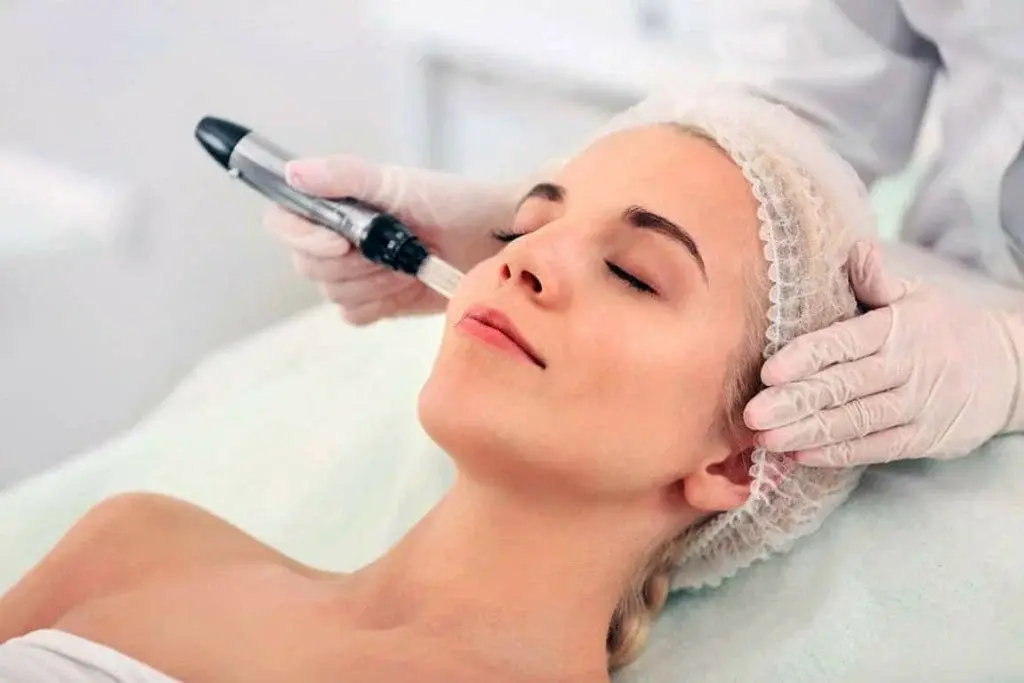
Microneedling creates thousands of temporary micro-channels and a controlled wound-healing response. The exosome preparation is applied straight away so it can reach living skin through those channels. The aim is to amplify the repair phase that microneedling triggers, supporting collagen remodelling and calming post-procedure redness.
Exosomes are large compared with typical skincare molecules, so very little passes through an intact skin barrier. That is why reputable protocols pair them with a delivery treatment. Microneedling, also called collagen induction therapy, is the most common partner. The American Academy of Dermatology notes that microneedling on its own can improve acne scars, fine lines, rough texture and enlarged pores, with 3 to 5 treatments every 2 to 4 weeks often needed for scarring. Exosomes are added to try to make that response stronger or recovery smoother.
At Levirgo, exosomes can be combined with microneedling as part of a full face rejuvenation plan, or with your own platelet-rich plasma in Exo PRP. They sit within our wider skin booster menu, which lets your practitioner compare options rather than defaulting to the newest one.
| Delivery method | How it opens the skin | Typical use | Recovery |
|---|---|---|---|
| Microneedling | Fine needles create vertical micro-channels | Texture, pores, fine lines, acne scars | Redness usually settles within a few days |
| Radiofrequency microneedling | Needles plus heat in the dermis | Texture, laxity, scarring | A few days of redness, depending on settings |
| Fractional CO2 laser | Columns of ablated tissue | Deeper scarring and sun damage | About 4 days in the trial below; longer at deeper settings |
| Exo PRP | Microneedling with your own plasma plus exosomes | Thinning, tired or ageing skin | Mild redness for 24 to 48 hours |
Recovery times are general guides from the American Academy of Dermatology and the studies cited below. Your own recovery depends on depth, device settings and skin type.
Does exosome therapy work? What the clinical evidence shows
Early human studies are encouraging but limited. A 2026 meta-analysis of 39 studies reported average facial wrinkle improvement of 20.2%, and small randomised split-face trials show better results when exosomes are added to microneedling or laser. However, studies are small, protocols differ and long-term data are lacking.
The strongest individual studies use a split-face design, where one side of the face receives exosomes and the other a control, so each person acts as their own comparison. In a 12-week double-blind randomised trial of 25 patients with acne scars, all patients had three fractional CO2 laser sessions; the side treated with adipose stem cell-derived exosome gel improved by 32.5% on a scar scale, compared with 19.9% on the control side, and had slightly shorter downtime (Kwon et al., Acta Dermato-Venereologica, 2020).
A later split-face study in 28 people with facial ageing combined microneedling with an exosome-containing solution on one side and saline on the other, over three sessions three weeks apart. The exosome side scored significantly better on a global aesthetic scale, with device measurements showing greater improvement in wrinkles, elasticity, hydration and pigmentation (Park et al., Journal of Cosmetic Dermatology, 2023).
Data from Kwon et al., Acta Dermato-Venereologica, 2020 (25 patients, split-face, fractional CO2 laser on both sides). “Good response” means grade 2 or better on the investigator’s global assessment. The exosomes used were human-derived and supplied by the manufacturer, and results may not apply to other products.
Two caveats matter. First, the scoping review by Knauer and colleagues concluded that human studies on topical exosomes remain scarce and that much of the evidence is extrapolated from laboratory models; commercial products they examined gave minimal information on isolation, processing or shelf life. Second, several of the best trials used human-derived exosomes, which cannot legally be sold as cosmetic products in the UK. A result from one product does not transfer automatically to a plant-derived alternative.
Is exosome therapy legal and regulated in the UK?
Topical exosome skincare can be legal, but the rules are strict and still evolving. UK cosmetics law lists “cells, tissues or products of human origin” as prohibited in cosmetic products, and no regulator worldwide has approved an exosome product for a medical indication. Injecting unlicensed exosome preparations is not an approved aesthetic use.
The UK retained the EU Cosmetics Regulation (EC) No 1223/2009 after Brexit. Entry 416 of Annex II, the list of banned substances, reads simply: “Cells, tissues or products of human origin.” That is why most exosome products marketed to UK clinics describe plant or animal sources. Products that make medicinal claims, or are injected, move out of cosmetics law and into medicines regulation, where the Medicines and Healthcare products Regulatory Agency (MHRA) is responsible and a marketing authorisation would be needed.
Internationally the picture is similar. The US Food and Drug Administration issued a public safety notification in December 2019 after serious adverse events in patients in Nebraska treated with unapproved products marketed as containing exosomes, and stated that there are no FDA-approved exosome products. A 2026 expert overview in the Aesthetic Surgery Journal confirmed that no regulatory agency worldwide has yet approved an exosome product for any medical indication.
Never agree to injected exosomes
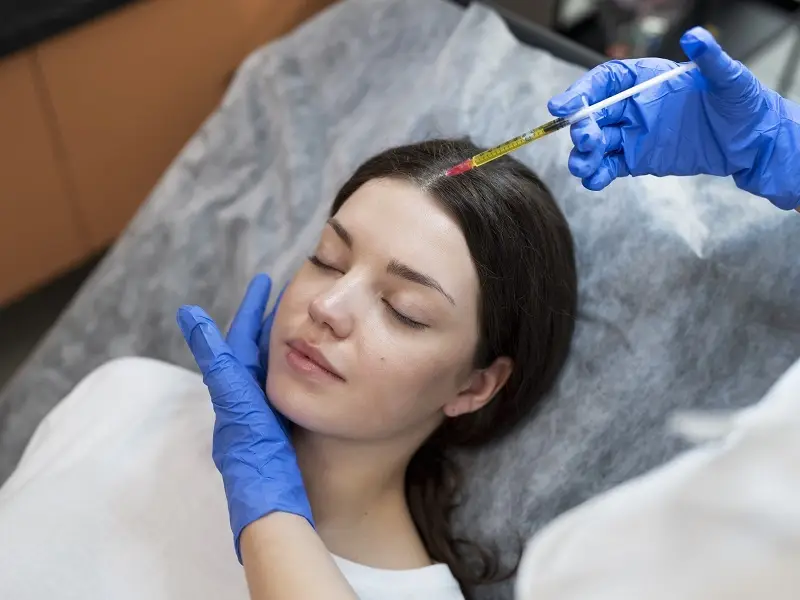
A 2025 case report describes skin necrosis and lasting atrophic scars in a 38-year-old man after a freeze-dried exosome product, which the manufacturer recommends only for topical use with microneedling, was injected into his cheeks; three laser sessions afterwards brought only modest improvement (AlBargawi, Journal of Cosmetic Dermatology). If you are offered exosome “injections”, “skin booster shots” or treatment in a non-medical setting, walk away.
Wider aesthetics regulation is also changing. The Department of Health and Social Care’s licensing proposals for England place microneedling in the lowest-risk “green” tier, while injectable biorevitalisation and PRP sit in the “amber” tier requiring healthcare oversight. The government confirmed in August 2025 that it will proceed with regulation, with details still being finalised. Until then, choosing a clinic with registered healthcare professionals is your best protection.
Who is a good candidate for exosome therapy, and who is not?
Exosome therapy suits adults with early to moderate skin-quality concerns: dullness, uneven texture, fine lines, enlarged pores, mild acne scarring or slow recovery after procedures. It is not suitable during pregnancy or breastfeeding, with active infection or acne flares, keloid scarring, isotretinoin use, or where laxity and volume loss are the main problem.
Often a good fit
- Adults with dull, tired-looking or dehydrated skin who want gradual, natural improvement.
- People with fine lines, crepey texture or enlarged pores who are already considering microneedling.
- Mild to moderate atrophic acne scarring, usually as part of a course with microneedling or laser.
- Anyone who wants a regenerative option without a blood draw, or who is weighing it against PRP.
- Patients planning laser resurfacing who want support for the recovery phase.
Not suitable, or needs a doctor’s review first
- Pregnancy or breastfeeding, because safety data are lacking.
- Active skin infection, cold sores, sunburn, or an acne or rosacea flare in the area.
- A history of keloid scars, poor wound healing or immunodeficiency.
- Isotretinoin use, current cancer treatment or radiotherapy (the American Academy of Dermatology lists these as reasons to avoid microneedling).
- Significant sagging or volume loss, where HIFU, fillers or surgery are more relevant.
- Unrealistic expectations of a “facelift in a vial”.
Skin tone also matters. Any treatment that injures the skin can cause post-inflammatory hyperpigmentation, which is more common in medium to deeper skin tones. A 2022 meta-analysis of 12 randomised trials (414 participants, Shen et al., Aesthetic Plastic Surgery) found microneedling compared favourably with other acne scar treatments for this risk, but settings, aftercare and sun protection still need to be tailored.
What happens during a DAX exosome therapy session?
A session takes about 60 to 90 minutes, including numbing. The skin is assessed and cleansed, a topical anaesthetic is applied, microneedling creates micro-channels, and the reconstituted exosome preparation is applied and left on the skin. You go home with calming products, sun protection and written aftercare.
- Consultation and medical history
Your practitioner reviews your skin, medicines (including isotretinoin, retinoids and blood thinners), cold sore history and goals, explains the evidence and alternatives, and takes baseline photographs.
- Cleanse and numb
Make-up and oils are removed, the skin is disinfected, and topical anaesthetic cream is applied for around 20 to 30 minutes.
- Microneedling
A sterile, single-use needle cartridge is passed over each area at a depth chosen for your skin and concern, creating uniform micro-channels. Pinpoint bleeding is normal on deeper passes.
- Exosome application
The exosome preparation is reconstituted, applied immediately to the treated skin and pressed in, often in layers so the micro-channels stay saturated.
- Soothe and protect
Calming products are applied once the skin has settled. You receive aftercare instructions and a follow-up plan for the rest of your course.
For a detailed, minute-by-minute walk-through of the appointment itself, including how it feels, what your skin looks like on each day of recovery and how to pair it with other facials, read our companion guide to the exosome facial experience in Knightsbridge.
What results are realistic, and how long do they last?
Most people notice a short-lived glow within days, while meaningful change in texture, tone and fine lines builds over 6 to 12 weeks after a course of about three sessions. Collagen remodelling continues for months. Results are not permanent, because skin keeps ageing, so maintenance every few months is common.
| Concern | Likely benefit | Better or additional options |
|---|---|---|
| Dullness and uneven texture | Good, builds over a course | Superficial peels, luxury facials |
| Fine lines and early crepiness | Modest to good | Polynucleotides, skin boosters |
| Enlarged pores | Modest | Salicylic peels, microneedling courses |
| Atrophic acne scars | Modest to good alongside microneedling or laser | CO2 laser, subcision, scar treatment |
| Post-procedure redness and recovery | Good supporting role | LED, barrier-repair skincare |
| Pigmentation and melasma | Limited and variable | Dermatology-led pigment plan |
| Sagging and volume loss | Minimal | HIFU, fillers, surgical opinion |
Benefit ratings summarise the clinical studies cited in this guide and our clinical judgement. Individual results vary and are not guaranteed.
The American Academy of Dermatology notes that after microneedling you may see improvement within a few weeks, but it usually takes several months to see full results because new collagen forms slowly. In the trials above, the final assessments were made 6 weeks after the last session. There are no robust data yet on how long exosome-enhanced results last beyond six months, so we plan maintenance around how your skin responds, typically one session every three to six months, together with daily sun protection.

Not sure whether exosomes are right for your skin?
Book a doctor-led skin assessment in Knightsbridge. We will explain the evidence, the product we would use and the alternatives, with no pressure to proceed.
Is exosome therapy safe? Side effects and risks
When a traceable product is applied topically after microneedling, reported side effects are usually mild and short-lived: redness, swelling, tightness, dryness and pinpoint bleeding. Rarer risks include infection, cold sore reactivation and pigmentation changes. Serious complications in the literature have followed unauthorised injections, not topical application.
In the published split-face trials, side effects of topical exosomes after microneedling or laser have generally been mild and short-lived, mainly redness, swelling and dryness. In the Kwon acne scar trial, downtime was slightly shorter on the exosome side (4.1 versus 4.3 days), and one exosome-treated side developed mild hyperpigmentation compared with two control sides. Those findings are reassuring but come from short follow-up periods of about 12 weeks.
| Effect | How common | Typical duration | What we do |
|---|---|---|---|
| Redness and warmth | Expected | 1 to 3 days | Cooling, bland moisturiser, no actives |
| Swelling and tightness | Common | 24 to 48 hours | Sleep slightly elevated, avoid heat |
| Dryness and light flaking | Common | Days 2 to 5 | Barrier cream, no picking |
| Small bruises or pinpoint scabs | Occasional | Up to a week | Leave alone, mineral make-up after 24 hours |
| Cold sore flare | Uncommon | Variable | Antiviral cover if you have a history |
| Post-inflammatory pigmentation | Uncommon, higher in deeper skin tones | Weeks to months | Conservative settings, strict SPF, early review |
| Infection or allergic reaction | Rare | Needs prompt care | Sterile technique, same-week review |
Frequency terms are descriptive, based on the microneedling and exosome literature cited. Contact the clinic promptly if pain, pus, spreading redness or blistering develops.
There are also theoretical risks with any biological product, particularly one derived from human donors, where screening, purification and storage are critical. This is one reason to insist on a named, traceable product with clear handling instructions, used by registered healthcare professionals.
Exosome therapy vs PRP vs polynucleotides: which is better?
None is universally better. PRP uses growth factors from your own blood and has the longest track record; polynucleotides are injected DNA fragments used for repair and hydration; exosomes are applied after micro-channelling and need no blood draw. A 2025 split-face trial found exosomes and PRP improved photoaged skin similarly.
| Exosome therapy | PRP with microneedling | Polynucleotides | Hyaluronic acid skin boosters | |
|---|---|---|---|---|
| What it is | Cell-derived or plant-derived vesicles | Your own concentrated platelets | Purified DNA fragments | Injectable hyaluronic acid, sometimes with amino acids |
| Delivery | Topical, after microneedling or laser | Microneedling or injection | Injection | Injection |
| Blood draw | No | Yes | No | No |
| Main strengths | Texture, recovery, radiance | Texture, scarring, general rejuvenation | Repair, elasticity, under-eye skin | Hydration, fine lines, glow |
| Typical course | 3 sessions, 3 to 4 weeks apart | 3 sessions, about 4 weeks apart | 2 to 3 sessions, 2 to 4 weeks apart | 2 to 3 sessions |
| Evidence maturity | Emerging, small trials | Established, protocols vary | Growing | Established for hydration |
| Usual downtime | Redness for a few days | Mild redness for 24 to 48 hours | Small bumps, possible bruising for 1 to 2 days | Small bumps, possible bruising for 1 to 2 days |
Course lengths are typical clinical protocols and vary between patients. Explore the options on our skin boosters, PRP and polynucleotides pages.
The only head-to-head comparison we found is an investigator-blinded, split-face non-inferiority trial in which people with mild to moderate photoageing had three radiofrequency microneedling sessions, with PRP on one side and adipose stem cell exosomes on the other. Both sides improved equally in wrinkling, discolouration, redness, texture and overall appearance, and biopsies showed similar increases in collagen I (Estupiñan et al., Journal of Cosmetic Dermatology, 2025). The practical difference is convenience: exosomes avoid a blood draw and centrifuge time.
How much does exosome therapy cost in London?
In London, exosome therapy with microneedling typically costs £300 to £650 per session, or about £850 to £1,600 for a course of three. Adding exosomes to RF microneedling or laser usually adds £150 to £350. Prices depend on the product, delivery method, treatment area and the practitioner’s qualifications.
| Option | Typical London price | What affects the price |
|---|---|---|
| Single session with microneedling | £300 to £650 | Product, area, clinician time |
| Course of 3 sessions | £850 to £1,600 | Package structure, add-on areas such as neck |
| Exosomes added to RF microneedling or laser | £150 to £350 on top of the base treatment | Base device and depth |
| Maintenance session (every 3 to 6 months) | £300 to £550 | How your skin responded to the course |
Indicative ranges only, not Levirgo prices. Your personalised plan and price are confirmed in writing after an in-person skin assessment.
Very low prices deserve scrutiny. Genuine professional products, sterile single-use cartridges, clinical time and aftercare all cost money. Our guide to non-invasive facial rejuvenation costs in London explains how to compare quotes fairly.
How to choose an exosome therapy clinic in London
Choose a clinic where treatment is led or overseen by a GMC-registered doctor or NMC-registered nurse, the product is named and traceable, exosomes are applied topically only, and the practitioner discusses evidence, risks and alternatives openly. Check registers yourself and avoid anyone offering exosome injections or guaranteed results.
- Ask for the product name and source. You should be told whether the exosomes are plant, animal or human-derived and be able to see the packaging.
- Confirm topical use only. The answer to “Will this be injected?” should be an unambiguous no.
- Check professional registration. Doctors appear on the General Medical Council register and nurses on the Nursing and Midwifery Council register. The Joint Council for Cosmetic Practitioners (JCCP) also keeps a register of practitioners.
- Ask about the evidence. A good practitioner will describe it as promising but early, not “proven” or “stem cell regeneration”.
- Expect a proper assessment. Medical history, contraindications, skin type and photographs should come before any booking.
- Look for honest alternatives. If PRP, a peel or laser would serve you better, you should hear that.
- Get aftercare in writing and know who to contact if something does not look right.
Why choose Levirgo for exosome therapy in Knightsbridge?
Levirgo Aesthetics Clinic is a doctor-led clinic at 6 Beauchamp Place, Knightsbridge, London SW3 1NG, a short walk from Harrods and Knightsbridge Underground station on the Piccadilly line. We explain the evidence honestly, use exosomes topically with microneedling, and recommend alternatives when they suit you better.
- Doctor-led assessment of your skin, medical history and goals before any treatment is booked.
- Exosome preparations applied topically to micro-channelled skin, never injected.
- Transparent discussion of product source, the current evidence and UK regulation.
- A full regenerative menu, including PRP and Exo PRP, polynucleotides and skin boosters, so the recommendation fits your skin rather than a single product.
- Photographs at baseline and follow-up, so progress is measured.
- A CQC-compliant clinical environment with sterile technique throughout.
Beauchamp Place runs between Brompton Road and Walton Street, which makes the clinic easy to reach for patients from Chelsea, Belgravia, South Kensington and Kensington. To discuss whether exosome therapy is right for you, book a consultation online or send us a question. You can browse more guides in our skin treatments journal.
Frequently asked questions
What is DAX exosome therapy?
DAX exosome therapy is a professional skin treatment in which an exosome preparation is applied to the skin immediately after microneedling or laser. Exosomes are nano-sized vesicles that carry signalling molecules between cells. The aim is to support the repair response triggered by microneedling, improving texture, fine lines and recovery. It is a skin-quality treatment, not a filler or lifting procedure.
Is exosome therapy legal in the UK?
Topical exosome products can be legal when they meet cosmetics law, which prohibits cells, tissues or products of human origin (Annex II, entry 416). No exosome product is approved as a medicine, and injecting unlicensed exosome preparations is not an approved aesthetic use. Regulation is still evolving, so ask your clinic exactly what product is used and where it comes from.
Are exosomes injected?
They should not be. At Levirgo, exosomes are applied topically onto skin that has just been micro-channelled. Published case reports describe necrosis, nodules and lasting scars after unauthorised exosome injections, often in non-medical settings. If a clinic offers exosome injections or “exosome skin booster shots”, we recommend you do not proceed.
Does exosome therapy actually work?
Early evidence is promising. A 2026 meta-analysis of 39 human studies reported average wrinkle improvement of about 20%, and randomised split-face trials show better results when exosomes are added to microneedling or laser. However, most studies are small, use different products and follow patients for only a few months, so results cannot be guaranteed.
Are exosomes the same as stem cells?
No. Exosomes are vesicles released by cells, not living cells themselves. Some are produced from stem cell cultures, others from platelets, milk or plant cells. They cannot grow into tissue or replace your own cells. Descriptions such as “stem cell facial” are therefore misleading, and human-derived material is prohibited in UK cosmetic products, so always ask what the source of your product is.
How many exosome therapy sessions will I need?
Most plans involve three sessions three to four weeks apart, which mirrors the protocols used in the published split-face trials. Acne scarring may need more sessions, often combined with microneedling or laser. Your practitioner will review progress against baseline photographs before recommending further sessions or maintenance.
How long do exosome therapy results last?
Improvements in texture and fine lines build over 6 to 12 weeks and can last several months, but there is little long-term data beyond six months. Skin continues to age, so many people choose a maintenance session every three to six months, alongside daily SPF 30 or higher and a consistent skincare routine.
Is exosome therapy better than PRP?
Not necessarily. A 2025 split-face trial found exosomes and PRP, each combined with radiofrequency microneedling, improved photoaged skin equally, with similar increases in collagen. PRP has a longer track record and uses your own blood; exosomes avoid a blood draw. The right choice depends on your skin, preferences and budget.
Can exosome therapy help acne scars?
It can support scar treatment. In a randomised trial of 25 patients having fractional CO2 laser, the exosome-treated side improved by 32.5% on a scar scale versus 19.9% on the control side. Exosomes work best as part of a scar plan with microneedling, laser or subcision rather than on their own.
Who should not have exosome therapy?
It is not suitable during pregnancy or breastfeeding, with active infection, cold sores, sunburn or an acne flare, a history of keloid scarring or poor healing, immunodeficiency, current cancer treatment, or isotretinoin use. People whose main concern is sagging or volume loss are usually better served by other treatments, such as HIFU, fillers or a surgical opinion.
Is exosome therapy safe for darker skin tones?
It can be, with care. Microneedling carries a risk of post-inflammatory hyperpigmentation, which is more common in deeper skin tones. Conservative needle depths, gentle aftercare and strict sun protection reduce that risk. A practitioner experienced with your skin type should assess you first and may suggest a test area or a gentler starting protocol.
How much does exosome therapy cost in Knightsbridge?
Typical London prices are £300 to £650 per session with microneedling, or £850 to £1,600 for a course of three. Adding exosomes to RF microneedling or laser usually adds £150 to £350. These are indicative ranges rather than Levirgo prices; your personalised plan and price are confirmed in writing after your skin assessment.
Levirgo Aesthetics Clinic · Knightsbridge
Evidence-led regenerative skin care in Knightsbridge
An honest assessment, a named and traceable product, topical application only, and a plan measured against your own baseline photographs. No obligation to proceed.
Sources & further reading
- Duncan DI, et al. Exosomes in Aesthetic Medicine: An Overview. Aesthetic Surgery Journal, 2026;46(Suppl 1)
- Stack ER, et al. Clinical Advances in Exosome-Based Therapies for Aesthetic Medicine: A Systematic Review and Meta-analysis. Aesthetic Surgery Journal, 2026
- Knauer G, et al. Clinical Evidence and Commercial Landscape of Topical Exosomes for Skin Rejuvenation: A Scoping Review. Aesthetic Surgery Journal, 2026
- Kwon HH, et al. Adipose Stem Cell-derived Exosomes and Fractional CO2 Laser for Acne Scars: Randomised Split-face Study. Acta Dermato-Venereologica, 2020
- Park GH, et al. Exosome-containing Solution and Microneedling for Facial Skin Aging: Randomised Split-face Study. Journal of Cosmetic Dermatology, 2023
- Estupiñan B, Ly K, Goldberg DJ. Adipose Stem Cell-Derived Exosomes Versus Platelet-Rich Plasma for Photoaged Facial Skin. Journal of Cosmetic Dermatology, 2025
- Regulation (EC) No 1223/2009 on cosmetic products, Annex II (prohibited substances), legislation.gov.uk
- US Food and Drug Administration. Public Safety Notification on Exosome Products (December 2019)
- AlBargawi S. Necrosis Following Dermal Injection of Lyophilized Exosomes: A Case Report. Journal of Cosmetic Dermatology, 2025
- Shen YC, et al. Microneedling Monotherapy for Acne Scar: Systematic Review and Meta-Analysis of Randomized Controlled Trials. Aesthetic Plastic Surgery, 2022
- American Academy of Dermatology. Microneedling can fade scars, uneven skin tone, and more
- Department of Health and Social Care. The licensing of non-surgical cosmetic procedures in England: consultation document
This article is general information about exosome therapy and is not medical advice. The evidence base is still developing, regulation is evolving and individual results vary. Suitability, benefits and risks can only be assessed in a personal consultation with a registered healthcare professional. Prices are indicative London ranges for 2026 and are confirmed in writing after assessment.