

Face treatments
Exosome Facial in Knightsbridge: What to Expect, Recovery and Results
Thinking about booking an exosome facial? This is the practical guide: exactly what happens in the treatment room, how your skin looks on each day of recovery, how to fit it around other facials and events, and how often to come back.
 By Fatemeh, Founder & Lead Practitioner, Levirgo Aesthetics Clinic 17 min read
Reviewed September 2026

What is an exosome facial?
An exosome facial is an in-clinic facial built around microneedling, with a professional exosome preparation applied to the skin straight after needling. It is framed by a proper cleanse, numbing and a calming finish. The goal is smoother texture, better radiance and fine-line softening over a course.
Think of the exosome facial as the experience and the exosome preparation as the active ingredient. Exosomes are nano-sized vesicles that cells use to pass signals to each other, and in skin care they are used to support the repair response that microneedling sets off. Because they cannot cross an intact skin barrier in meaningful amounts, they are applied to skin that has just been micro-channelled. If you want the science, the evidence and the regulatory detail in depth, read our guide to DAX exosome therapy for skin rejuvenation. This page focuses on what the appointment is actually like.
At Levirgo, exosomes are part of our skin booster menu and can be combined with microneedling, which is also offered as one of our facial add-ons. That flexibility means the facial can be built around your skin that day, rather than a fixed routine.
Three questions to ask before you book
What exosome product will be used and where do the exosomes come from? Will it be applied only on the skin surface after needling? Who will perform the microneedling, and what is their professional registration? Clear, confident answers are a good sign.
What happens during an exosome facial, step by step?
A typical exosome facial follows eight stages: consultation and photos, double cleanse, numbing, skin preparation, microneedling, exosome application, a calming finish such as LED, then SPF and aftercare advice. From arrival to leaving, allow roughly 75 to 90 minutes, a little longer for your first visit.
- Consultation and photographs
Your practitioner checks your medical history, medicines and recent treatments, looks closely at your skin and takes baseline photographs. First visits include a fuller discussion of goals and alternatives.
- Double cleanse
Make-up, SPF and oils are removed completely, because anything left on the surface could be pushed into the skin during needling.
- Numbing
A topical anaesthetic cream is applied and left to work while you relax. This is the longest waiting part of the appointment.
- Antiseptic preparation
The numbing cream is removed and the skin is cleaned again with an antiseptic so the field is as clean as possible.
- Microneedling
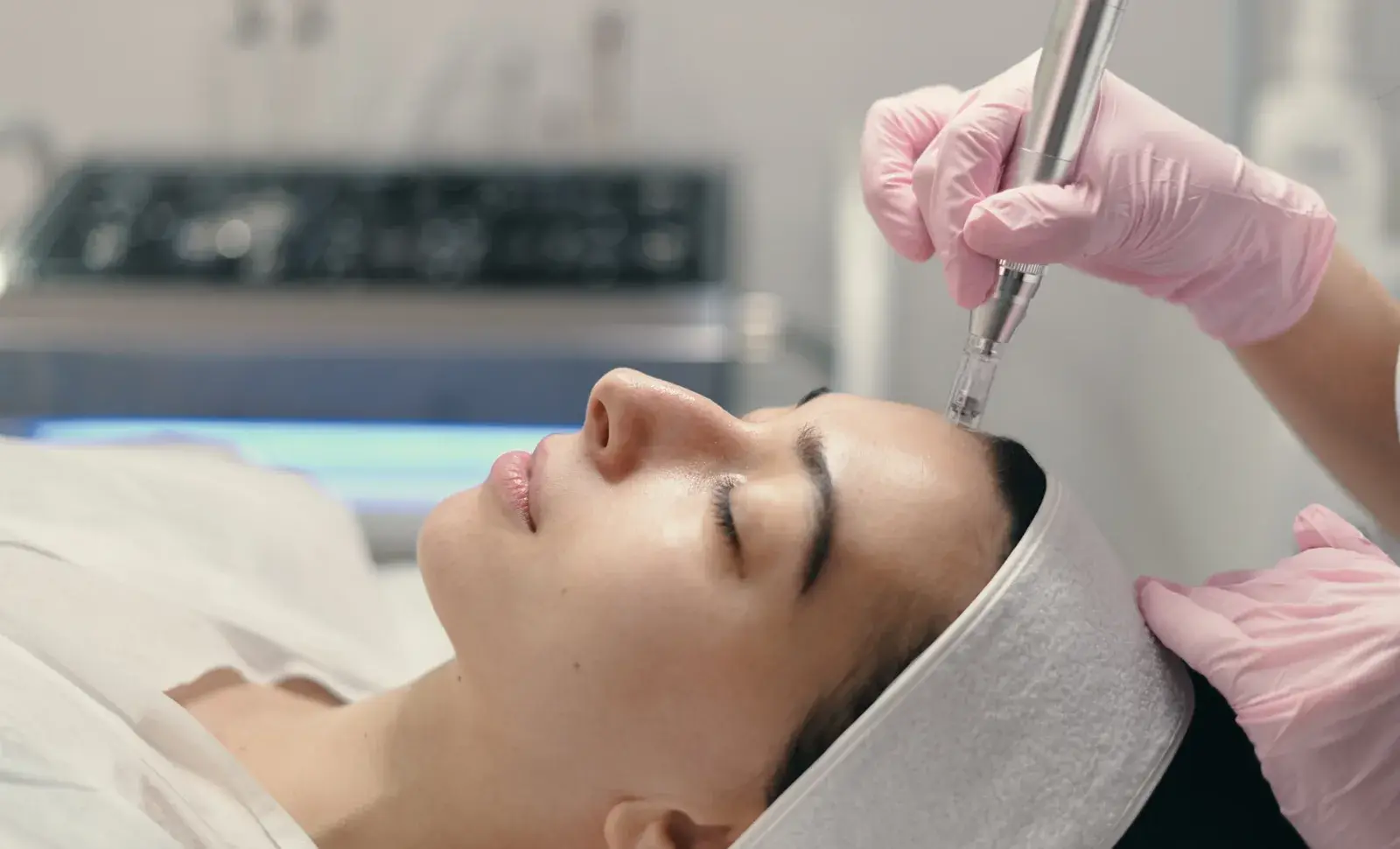
A sterile, single-use cartridge is glided across the face in sections. Depth is adjusted for thinner areas such as the forehead and around the eyes, and for areas of scarring.
- Exosome application
The exosome preparation, often reconstituted from a powder moments earlier, is applied to the treated skin and gently pressed in, usually in more than one layer.
- Calming finish
Depending on your skin, this may include a cooling mask or LED light therapy, which our add-ons menu describes as especially useful after microneedling.
- Protection and aftercare
A post-procedure moisturiser and mineral sun protection are applied, and you leave with written instructions and your next appointment date.
| Stage | Approximate time | What you feel |
|---|---|---|
| Consultation and photographs | 10 to 20 minutes | Nothing physical; time for questions |
| Cleanse and numbing | 25 to 35 minutes | Cool cream, then mild tingling or numbness |
| Microneedling | 15 to 20 minutes | Vibration and light scratching, more over bone |
| Exosome application | 5 to 10 minutes | Cool, slightly tacky layers |
| Calming finish and SPF | 10 to 20 minutes | Warmth easing; skin feels tight |
Approximate timings for a full-face session. Treating the neck, adding LED or a longer first consultation will extend the appointment.
Does an exosome facial hurt, and how should you prepare?
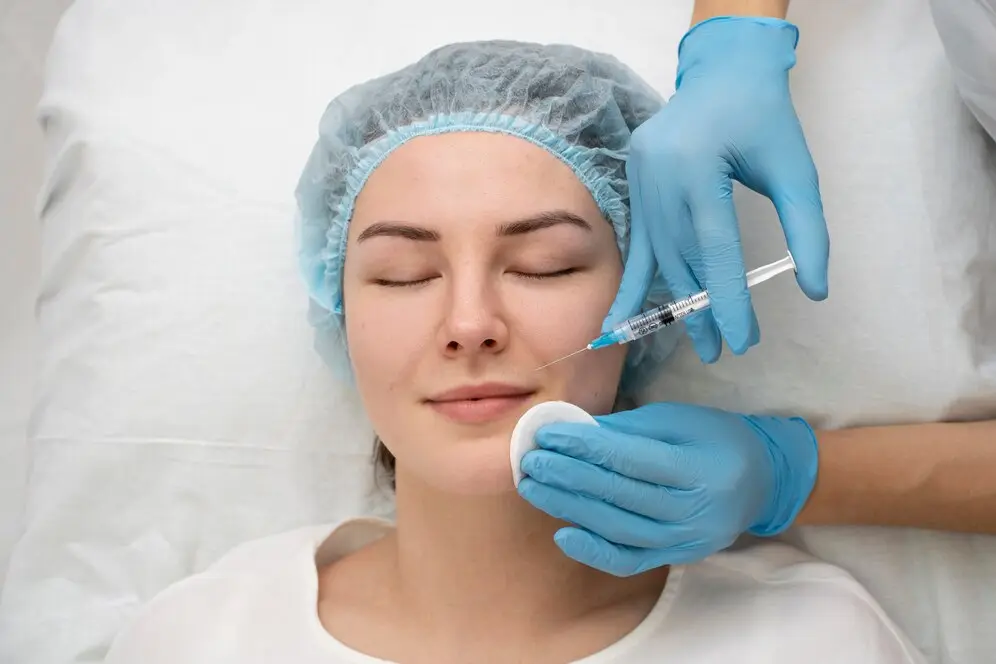
With numbing cream, most people describe an exosome facial as uncomfortable in places rather than painful: a vibrating, scratchy sensation that is stronger over the forehead, jawline and upper lip. Preparation matters more than pain relief. Pause retinoids and exfoliants, avoid sunburn, and mention any cold sore history.
Sensation depends on needle depth, the area being treated and your own sensitivity. Bony areas feel sharper; cheeks are usually easiest. Your practitioner can pause at any point, and treatment depth is always a balance between comfort, safety and the result you want. A 2018 practical review of microneedling in Dermatologic Surgery describes the treatment as producing clinical improvement with expedient recovery and limited side effects when technique and aftercare are right.
Your pre-facial checklist
- Stop retinoids, retinol, strong acids and scrubs for about 3 to 5 days beforehand, or as your practitioner advises.
- Avoid sunbeds, sunburn and self-tan on the face for at least a week.
- Tell us if you have had cold sores; you may need antiviral cover.
- Mention any isotretinoin use, blood-thinning medicines, keloid scars, pregnancy or recent injectables.
- Postpone if you have an active breakout, infection, rosacea flare or a cold sore.
- Arrive without heavy make-up if possible, and plan a quiet evening afterwards.
If you have had anti-wrinkle or filler treatment recently, your practitioner will advise on spacing. It is usually simplest to separate injectables and microneedling by a couple of weeks so any swelling or bruising can be assessed properly.
Exosome facial recovery: what does your skin look like each day?
Most people look flushed and feel tight on day one, pinker than usual on day two, and dry or lightly flaky around days two to four. By day five to seven the skin usually looks normal, often brighter. The American Academy of Dermatology says post-microneedling redness usually fades within a few days to a week.
| When | How skin usually looks and feels | What to do |
|---|---|---|
| Day 0 (evening) | Sunburn-like flush, warmth, tightness; possible pinpoint spots | Leave skin bare or use only the products provided |
| Day 1 | Pink, slightly swollen, sensitive to touch | Gentle cleanse, bland moisturiser, mineral SPF |
| Days 2 to 4 | Fading pinkness, dryness, fine flaking, rough feel | Moisturise often; do not scrub or pick |
| Days 5 to 7 | Normal colour for most people, smoother and brighter | Reintroduce usual routine gradually |
| Weeks 2 to 6 | Gradual improvement in texture and tone | Daily SPF; book next session at 3 to 4 weeks |
Typical course only. Deeper needling, radiofrequency microneedling, darker skin tones and sensitive skin can take longer. In a split-face laser study, average downtime was about 4 days (Kwon et al., 2020).
Use only what you are given on day one
Micro-channels stay open for a short time after treatment, so anything applied can be carried into the skin. A report in JAMA Dermatology described 3 women who developed facial granulomas after microneedling, two of whom had a vitamin C serum applied during treatment (Soltani-Arabshahi et al., 2014). Skip your own serums, fragranced products and make-up until your practitioner says it is safe.
Exosome facial aftercare: the first 72 hours and beyond
For the first 24 hours keep skin clean and bare, apart from the products provided. Avoid make-up for 24 hours, and exercise, saunas and swimming for about 48 hours. Pause retinoids and acids for 3 to 5 days. Use SPF 30 or higher with 4-star UVA daily, as the NHS recommends.
- First night: cleanse gently with lukewarm water, apply only the post-treatment products supplied, and sleep on a clean pillowcase.
- 24 hours: mineral make-up can usually be applied once the skin surface has settled.
- 48 hours: avoid heavy exercise, hot yoga, saunas, steam rooms and swimming pools, which add heat, sweat and bacteria.
- 3 to 5 days: keep retinoids, vitamin C, acids, scrubs and cleansing brushes on hold.
- 7 days: avoid direct sun, sunbeds and waxing or threading on the treated area.
- Every day: moisturise generously if dry, and never pick flaking skin.
Sun protection protects your result as well as your skin. Newly treated skin is more reactive, and ultraviolet exposure is a major driver of pigmentation. Contact the clinic promptly if you notice increasing pain, swelling that worsens after day two, pus, blistering, a rash or cold sore symptoms. You can reach us through our contact page or by phone.
When will you see results from an exosome facial?
A fresh, even glow often appears once the redness settles, around days five to seven. Changes in texture, fine lines and pores build over the following weeks as collagen remodels. In clinical trials, final results were assessed about six weeks after the third session, so judge your course at roughly three months.
In the Park trial, the side of the face treated with an exosome-containing solution after microneedling scored significantly better on a global aesthetic scale than the saline side, with greater measured improvement in wrinkles, elasticity, hydration and pigmentation. The 2026 meta-analysis by Stack and colleagues found consistent improvements across 39 studies, but warned that differing, non-standardised protocols limit how far results can be generalised. A separate 2026 scoping review concluded that human studies on topical exosomes remain scarce. We therefore describe results as likely gradual and modest, not guaranteed.
Two habits make the biggest difference to what you see: completing the course, and protecting skin from the sun between sessions. If your main concern is volume loss or sagging, an exosome facial will not change that; ask about full face rejuvenation options instead.
Plan your exosome facial around your diary
Book a skin assessment in Knightsbridge. We will map out your course, recovery days and any events, and tell you honestly if another facial would suit you better.
Can you combine an exosome facial with other facials and treatments?
Yes, with sensible spacing. LED and gentle hydrating facials pair easily, and LED can be added on the same day. Chemical peels, laser and other needling need separate appointments, because each creates its own healing period. Allow skin to recover fully before the next exfoliating or resurfacing treatment.
The simplest rule is one controlled injury at a time. Microneedling and chemical peels both deliberately disrupt the skin, and the American Academy of Dermatology gives healing times of 1 to 7 days for light peels, 7 to 14 days for medium peels and 14 to 21 days for deep peels. Layering those recovery periods on top of each other increases irritation and pigmentation risk without improving results.
Source: American Academy of Dermatology patient guidance on microneedling and on chemical peels. Healing time is not the same as ideal spacing; your practitioner will advise on intervals for your skin.
| Treatment | Same day? | Typical spacing | Why |
|---|---|---|---|
| LED light therapy | Yes, as a finishing step | Can also be used between sessions | Non-invasive and calming |
| Hydrating luxury facial (no exfoliation) | No | About 1 to 2 weeks either side | Lets micro-channels close and barrier settle |
| Superficial peel (salicylic, glycolic) | No | About 2 weeks either side | Avoids stacking two exfoliating injuries |
| Medium or deep peel | No | Plan as separate courses | Longer healing, higher pigmentation risk |
| Oxygen infusion, masks, face yoga | Not on needled skin | From about a week later | Pressure, massage and products need intact skin |
| Anti-wrinkle injections or fillers | Usually no | About 2 weeks apart | Allows swelling or bruising to be assessed |
| CO2 laser resurfacing | Only as a planned combined protocol | Doctor-led plan | Exosomes can be used after laser in some protocols |
Spacing shown is a general clinical guide, not a fixed rule, and is confirmed at consultation based on your skin and the depth of each treatment.
Red LED is a natural partner because it is non-invasive. In a controlled trial of 136 volunteers, twice-weekly red and near-infrared light treatment improved skin complexion, roughness and ultrasound-measured collagen density compared with controls (Wunsch and Matuschka, 2014). For guidance on choosing extras, see our guide to facial add-ons in Knightsbridge.
How often should you have an exosome facial? A maintenance schedule
Most plans start with a course of three facials, three to four weeks apart, mirroring clinical trial protocols. After a review at around three months, maintenance is typically one exosome facial every three to six months, with gentler facials or LED in between and daily sun protection throughout.
| Phase | Timing | What happens | Goal |
|---|---|---|---|
| Assessment | Week 0 | Consultation, photographs, patch or test area if needed | Confirm suitability and set expectations |
| Course | Weeks 0, 3 to 4 and 6 to 8 | Three exosome facials | Build texture and tone improvement |
| Review | About 3 months | Photographs compared with baseline | Decide whether results justify maintenance |
| Maintenance | Every 3 to 6 months | Single exosome facial | Sustain skin quality as skin continues to age |
| In between | Every 4 to 6 weeks if wished | Hydrating facial, LED or a superficial peel, spaced appropriately | Keep skin clear, calm and bright |
Illustrative plan based on the three-session protocols used in published trials and common clinical practice. There are no long-term trials defining an ideal maintenance interval for exosome facials.
For acne scarring, more sessions are common. The American Academy of Dermatology notes that scars may need 3 to 5 microneedling treatments every 2 to 4 weeks, and it can take several months to see the full result. If progress stalls, a review may point to a different tool, such as CO2 laser or targeted scar treatment, rather than more of the same.
Is an exosome facial safe, and who should avoid it?
An exosome facial is generally well tolerated when a traceable topical product is used with sterile microneedling by a trained professional. Expected effects are redness, tightness and dryness. It is not suitable during pregnancy or breastfeeding, with active infection or acne flares, keloid scarring, isotretinoin use or poor wound healing.
- Avoid or postpone: pregnancy and breastfeeding, cold sores or skin infection, sunburn, active acne or rosacea flares, open wounds.
- Needs a doctor’s review: keloid or hypertrophic scarring, slow wound healing, immunosuppression, current cancer treatment, isotretinoin within recent months, bleeding disorders.
- Extra care: medium to deeper skin tones (pigmentation risk), very sensitive or eczema-prone skin, a history of reactions to skincare.
Not all microneedling is the same. Radiofrequency microneedling adds heat and can suit laxity and scarring, but it carries different risks. A review of US Food and Drug Administration device reports from 2013 to October 2025 identified 114 reports describing 224 adverse events linked to radiofrequency microneedling, most often textural change (25.0%), pigment change (18.3%) and fat loss (11.6%) (Chou et al., Dermatologic Surgery, 2026). Reports like these cannot show how common problems are, but they underline why device choice, settings and training matter.
Product legality matters too. UK cosmetics law prohibits “cells, tissues or products of human origin” in cosmetic products (Annex II, entry 416), and exosomes should never be injected. Our exosome therapy evidence guide covers the regulation and case reports in detail.
How much does an exosome facial cost in London?
In London, an exosome facial with microneedling typically costs £300 to £600 per session, or £850 to £1,600 for a course of three. Maintenance sessions are usually £300 to £550. Price reflects the exosome product, sterile consumables, the practitioner’s clinical time and the aftercare included.
| Option | Typical London price | Good to know |
|---|---|---|
| Single exosome facial with microneedling | £300 to £600 | Full face; neck or décolletage usually extra |
| Course of 3 exosome facials | £850 to £1,600 | Often better value when booked as a plan |
| Exosomes added to RF microneedling or laser | £150 to £350 on top of the base treatment | Base treatment priced separately |
| Maintenance exosome facial | £300 to £550 | Every 3 to 6 months if you choose |
| LED finish added to a facial | Priced as an add-on | Confirmed at booking |
Indicative ranges only, not Levirgo prices. Your plan and price are confirmed in writing after your skin assessment.
When comparing quotes, check what is included: consultation, numbing, a named exosome product, single-use cartridges, a calming finish, aftercare products and a review. Our guide to non-invasive facial rejuvenation costs explains how treatments compare on value.
Why book your exosome facial at Levirgo in Knightsbridge?
Levirgo Aesthetics Clinic is a doctor-led clinic at 6 Beauchamp Place, Knightsbridge, London SW3 1NG, a few minutes’ walk from Knightsbridge Underground station on the Piccadilly line and close to Harrods. Every exosome facial starts with an assessment, uses topical application only, and comes with clear written aftercare.
- A skin assessment and medical history before your first facial, with honest advice if another treatment would suit you better.
- Exosome preparations applied only to the skin surface after microneedling, never injected, with the product and its source explained.
- Sterile technique, with needling depth tailored to each area of your face.
- Facials designed around your skin that day, with add-ons such as LED where they help.
- Before and after photographs so you can judge progress objectively.
- A calm clinic on Beauchamp Place, convenient for Belgravia, Chelsea, Sloane Square and Mayfair.
Ready to plan your course? Book a consultation, or browse more guides in our face treatments journal.
Frequently asked questions
How long does an exosome facial take?
Allow about 75 to 90 minutes. Around half an hour of that is cleansing and numbing, 15 to 20 minutes is microneedling, and the rest is applying the exosome preparation, a calming finish and aftercare advice. Your first appointment may take longer because it includes a fuller consultation and baseline photographs.
Does an exosome facial hurt?
Most people find it tolerable with numbing cream. You feel vibration and a light scratching sensation, which is stronger over the forehead, jawline and upper lip. Your practitioner adjusts depth for each area and can pause whenever you need. Skin feels warm and tight afterwards, similar to mild sunburn, and this usually eases over the evening.
How long will my face be red after an exosome facial?
Most people are pink for one to three days, with dryness or light flaking around days two to four. The American Academy of Dermatology says redness after microneedling usually disappears within a few days to a week. Deeper treatment, radiofrequency microneedling and sensitive skin can take a little longer, so plan quieter days if you can.
When can I wear make-up after an exosome facial?
Usually after 24 hours, once the skin surface has settled. Choose clean, mineral make-up and fresh brushes or sponges. On the day of treatment, use only the products your practitioner gives you, because micro-channels are still open and other products could irritate or be carried into the skin and cause a reaction.
When can I exercise after an exosome facial?
Wait about 48 hours before heavy exercise, hot yoga, saunas, steam rooms or swimming. Heat and sweat increase redness and swelling, and pools and gyms add bacteria while the skin is healing. A gentle walk is fine the next day. Your practitioner may extend this after deeper treatment or if your skin is still very red.
Can I have an exosome facial before an event?
Yes, but book it at least five to seven days before, and ideally as part of a course that finishes two to four weeks before a major occasion. Never book it the day before. If your event is within a few days, a hydrating facial or LED is a safer choice for a same-week glow.
How often should I have an exosome facial?
A typical plan is three facials three to four weeks apart, followed by a review at about three months. After that, many people maintain with one exosome facial every three to six months, with gentler facials or LED in between. There are no long-term trials that define a perfect interval, so the plan is personalised.
Can I combine an exosome facial with a chemical peel?
Not on the same day. Both treatments deliberately disrupt the skin, so they are usually spaced at least two weeks apart for superficial peels, and planned as separate courses for medium or deeper peels. LED is the easiest same-day companion because it is non-invasive and calming, and it can be used as the finishing step.
What should I avoid before an exosome facial?
Pause retinoids, strong acids and scrubs for three to five days, avoid sunburn, sunbeds and facial waxing for a week, and postpone if you have a cold sore, infection or active breakout. Tell your practitioner about isotretinoin, blood thinners, pregnancy, keloid scarring and any recent injectables, so the plan can be adjusted safely.
Is an exosome facial suitable for sensitive skin or rosacea?
Sometimes, but only when the skin is calm. Microneedling can trigger flushing in reactive skin, so a flare needs settling first and the depth is kept conservative. For some people with rosacea, a gentler facial with calming actives and red LED is the better starting point. Your practitioner will assess this in person.
What is the difference between an exosome facial and exosome therapy?
They use the same principle. “Exosome therapy” describes the regenerative treatment itself, and “exosome facial” describes the full in-clinic experience built around it, from cleansing and numbing to the calming finish and aftercare. Our exosome therapy guide covers what exosomes are, the clinical evidence and UK regulation in more depth.
How much does an exosome facial cost in Knightsbridge?
Typical London prices are £300 to £600 per session, £850 to £1,600 for a course of three, and £300 to £550 for maintenance sessions. These are indicative ranges rather than Levirgo prices; your personalised plan and price are confirmed in writing after your skin assessment in Knightsbridge.
Levirgo Aesthetics Clinic · Knightsbridge
An exosome facial, done carefully
A doctor-led clinic on Beauchamp Place with a named topical product, sterile technique, clear aftercare and a plan measured against your own photographs. No obligation to proceed.
Sources & further reading
- American Academy of Dermatology. Microneedling can fade scars, uneven skin tone, and more
- American Academy of Dermatology. Chemical peels: FAQs (healing times by peel depth)
- NHS. Sunscreen and sun safety
- Park GH, et al. Exosome-containing Solution and Microneedling for Facial Skin Aging: 12-week Randomised Split-face Study. Journal of Cosmetic Dermatology, 2023
- Kwon HH, et al. Adipose Stem Cell-derived Exosomes and Fractional CO2 Laser for Acne Scars: Randomised Split-face Study. Acta Dermato-Venereologica, 2020
- Stack ER, et al. Clinical Advances in Exosome-Based Therapies for Aesthetic Medicine: Systematic Review and Meta-analysis. Aesthetic Surgery Journal, 2026
- Knauer G, et al. Clinical Evidence and Commercial Landscape of Topical Exosomes for Skin Rejuvenation: A Scoping Review. Aesthetic Surgery Journal, 2026
- Soltani-Arabshahi R, et al. Facial Allergic Granulomatous Reaction and Systemic Hypersensitivity Associated With Microneedle Therapy. JAMA Dermatology, 2014
- Alster TS, Graham PM. Microneedling: A Review and Practical Guide. Dermatologic Surgery, 2018
- Chou M, Myers B, Avram M. Analysis of US FDA Data on Radiofrequency Microneedling Device Complications. Dermatologic Surgery, 2026
- Wunsch A, Matuschka K. A Controlled Trial of Red and Near-Infrared Light Treatment for Skin Rejuvenation. Photomedicine and Laser Surgery, 2014
- Regulation (EC) No 1223/2009 on cosmetic products, Annex II (prohibited substances), legislation.gov.uk
This article is general information about exosome facials and is not medical advice. The evidence for exosomes is still developing, regulation is evolving and individual results and recovery vary. Suitability and risks can only be assessed in a personal consultation. Timings and aftercare are typical guides; always follow the instructions your practitioner gives you. Prices are indicative London ranges for 2026 and are confirmed in writing after assessment.