

Face treatments
Luxury Facials in Knightsbridge: Medical-Grade Facials and Peels
A genuinely luxurious facial is defined by what happens to your skin, not just the robe and candles. This guide explains what makes a facial medical-grade, how chemical peel depths differ, which peels suit which skin types and concerns, and how to recover well.
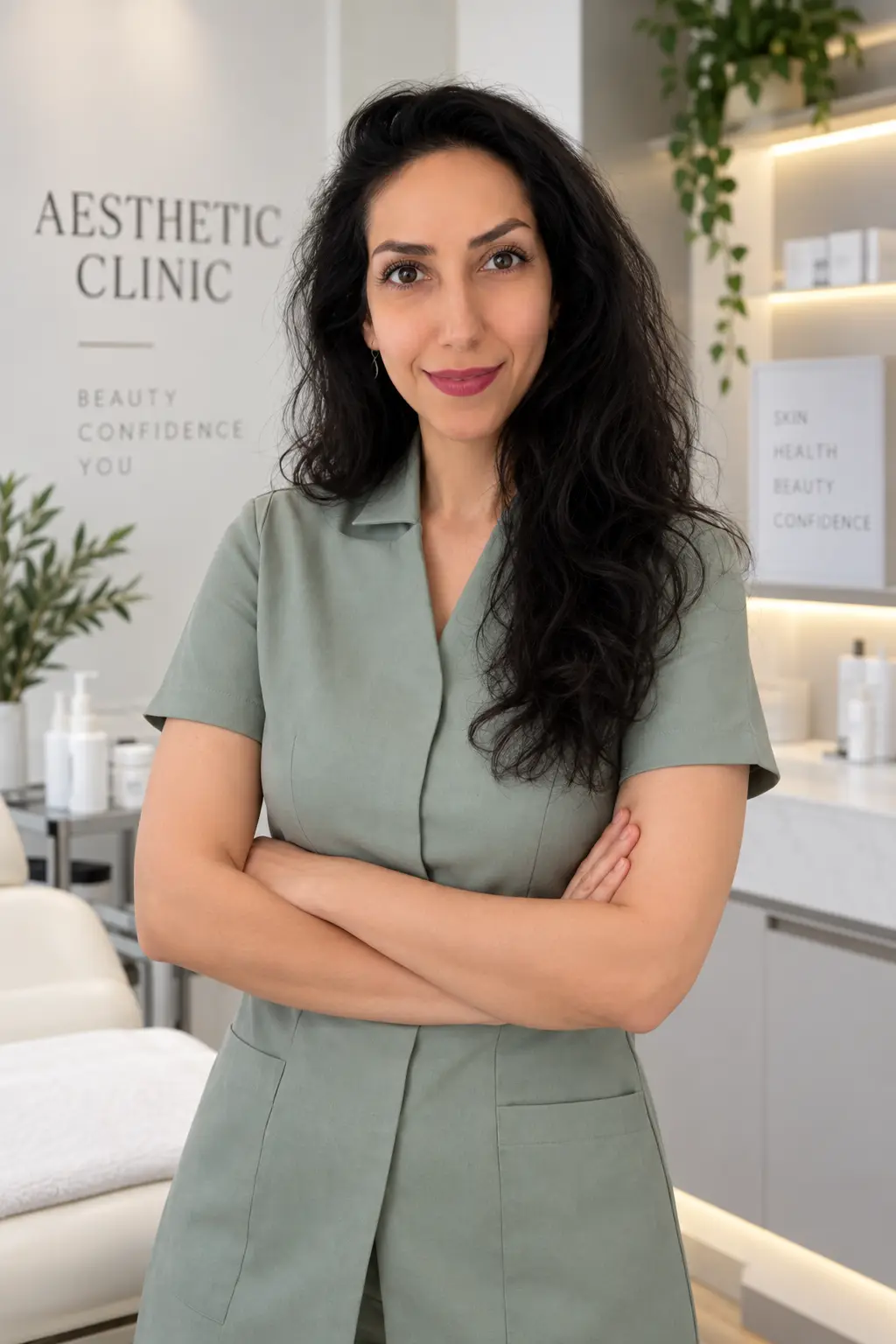 By Fatemeh, Founder & Lead Practitioner, Levirgo Aesthetics Clinic 18 min read
Reviewed September 2026

What makes a luxury facial “medical-grade”?
A medical-grade luxury facial is built on assessment, professional-strength actives and clinical judgement. Your skin type, concerns, medicines and history decide the protocol, which may include a chemical peel at a defined depth. It is delivered in a clinical setting, with aftercare and a plan, not just a pleasant hour.
The word “luxury” is used loosely. At its best, it means unhurried time with an experienced practitioner, excellent products and a treatment that changes your skin, delivered somewhere calm. What it should never mean is paying more for the same fixed routine that everyone else receives. Our luxury facials and skin peels are designed around your skin type and concerns, from open pores and dullness to acne scarring and pigmentation.
| Spa facial | Medical-grade luxury facial | |
|---|---|---|
| Starting point | A set “signature” routine | Skin assessment, medical history and goals |
| Active ingredients | Retail-strength, gentle | Professional peels and actives at defined concentrations |
| Exfoliation | Usually mechanical or mild enzymes | Chosen peel depth, matched to skin type |
| Who performs it | Beauty therapist | Trained aesthetic practitioner with clinical oversight |
| Safety screening | Basic questionnaire | Contraindications such as isotretinoin, pregnancy and cold sores |
| Outcome | Relaxation and a short-lived glow | Relaxation plus measurable change over a course |
| You leave with | A nice feeling | Aftercare, a home routine and a review plan |
The quickest way to tell the difference
Ask: “What will you do differently for my skin compared with the last client?” A medical-grade practitioner will talk about your skin type, the depth and strength of any peel, how your skin might react, and what you should change at home.
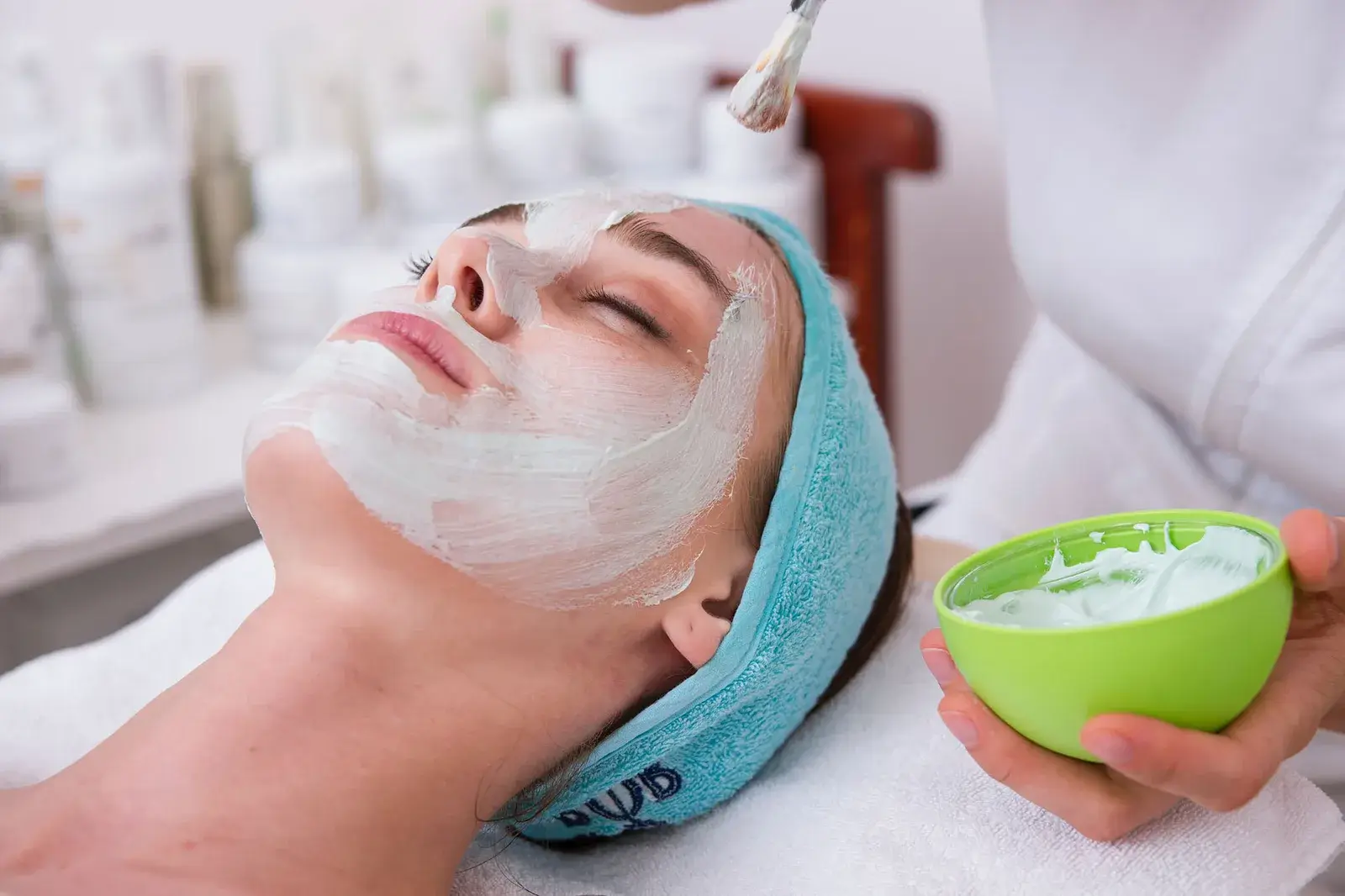
What is the difference between superficial, medium and deep chemical peels?
Chemical peels are classified by how deep they injure the skin. Superficial peels stay within the epidermis and heal in about a week. Medium peels reach the upper dermis and take 7 to 14 days. Deep peels reach the mid dermis, need 14 to 21 days and carry the greatest risks.
A 2018 review from Stanford dermatologists in the Journal of Clinical and Aesthetic Dermatology describes chemical peeling as controlled removal of skin layers using specific acids, producing a predictable depth of injury. The depth depends on the acid, its concentration, how many layers are applied and how long it stays on. That is why two “glycolic peels” can behave very differently.
| Depth | Skin layer reached | Example agents | Typical healing | Proposed England licensing tier |
|---|---|---|---|---|
| Superficial | Epidermis only | 30 to 50% glycolic, 10 to 30% lactic, 30% salicylic, mandelic | 1 to 7 days | Green: licensed practitioner |
| Medium | Entire epidermis and papillary dermis | 35 to 50% TCA, 70% glycolic, Jessner’s combined with TCA | 7 to 14 days | Amber: healthcare oversight |
| Deep | Mid reticular dermis | Phenol (Baker-Gordon) peels | 14 to 21 days | Red: regulated healthcare professionals only |
Agents and depths from Soleymani et al., J Clin Aesthet Dermatol, 2018. Healing times from the American Academy of Dermatology. Tiers are from the Department of Health and Social Care consultation proposals for England, which the government confirmed in August 2025 it will take forward; detail is still being finalised.
For most people seeking brighter, clearer, smoother skin, a course of superficial peels is the sensible starting point. The American Academy of Dermatology notes that light peels may need to be repeated, often 3 to 5 times, every 2 to 5 weeks, to achieve the desired result. Medium peels are used for more established sun damage, pigmentation and texture, and deep peels are a significant medical procedure rather than a facial.
Which chemical peel is right for your skin concern?
Match the acid to the concern. Salicylic acid suits oily, congested and acne-prone skin; glycolic acid suits dullness, uneven tone and early photoageing; Jessner’s suits active acne and marks; medium and deeper peels address established sun damage, pigmentation and scarring after careful assessment.
Levirgo offers six professional peels, each linked to specific concerns. The table below summarises how they are typically used. Your practitioner will confirm the strength, number of layers and whether a gentler option is safer for your skin.
| Peel | Main concerns | How it works | Typical recovery |
|---|---|---|---|
| Salicylic peel | Large pores, blackheads, oiliness, breakouts | Oil-soluble BHA that exfoliates inside pores | Mild dryness for a few days |
| Superficial peel | Dryness, dullness, first peel, sensitive skin | Gentle surface exfoliation with hydration | Minimal; slight tightness |
| Glycolic peel | Dullness, mild discolouration, uneven texture | AHA that loosens surface cells and improves product absorption | Light flaking for a few days |
| Jessner’s peel | Active acne, red or brown acne marks | Multi-acid formula that exfoliates and clears pores | Visible peeling for several days |
| Medium peel | Early ageing, uneven tone, photodamage | Reaches the middle layers to stimulate renewal | About 7 to 14 days |
| Deep peel | Stubborn pigmentation, post-acne marks, textured scarring | Intensive resurfacing of deeper layers | Two weeks or more; medical assessment required |
Treatment descriptions from Levirgo’s luxury facial service page. Recovery ranges are general guides based on peel depth and are confirmed at consultation.
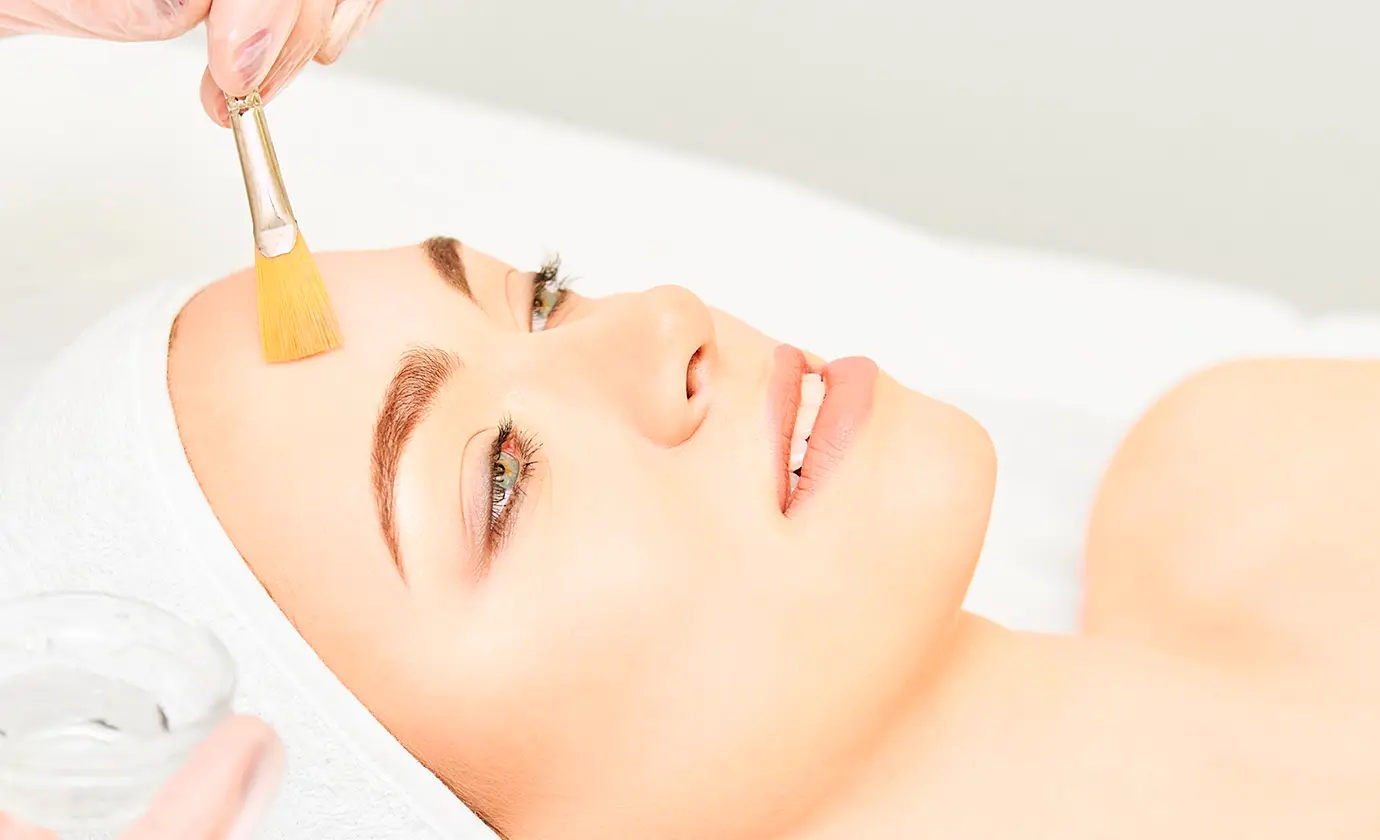
Peels for pigmentation and melasma
Pigmentation, especially melasma, needs patience and a combined plan. In a randomised split-face study of 16 patients with melasma, adding three 30% glycolic acid peels to laser treatment improved melasma severity scores by 37.4%, compared with 16.7% on the laser-only side (Park et al., Clinical and Experimental Dermatology, 2011). Melasma often returns without strict sun protection, so peels are best seen as one part of long-term management.
Are chemical peels safe for darker skin tones?
Yes, when chosen carefully. Deeper skin tones (Fitzpatrick types IV to VI) are more prone to post-inflammatory hyperpigmentation, so superficial peels such as salicylic or glycolic acid are preferred and medium or deep peels need great caution. A study in skin types V and VI found 88% improved with salicylic peels.
The Fitzpatrick scale, developed by dermatologist Thomas Fitzpatrick and reviewed in his 1988 paper in Archives of Dermatology, groups skin by how it responds to sun, from type I (always burns, never tans) to type VI (deeply pigmented, rarely if ever burns). It is not a measure of ethnicity, but it is a useful shorthand for how skin may react to injury, including peels.
| Type | Sun response | Peel considerations |
|---|---|---|
| I and II | Burns easily, tans little | Tolerates most superficial peels; higher sun damage and redness risk |
| III | Sometimes burns, tans gradually | Most superficial peels suitable; care with medium depth |
| IV | Rarely burns, tans well | Pigmentation risk rises; test areas and priming often used |
| V and VI | Very rarely burns, deeply pigmented | Favour superficial salicylic, glycolic or mandelic peels; avoid aggressive depth |
Scale from Fitzpatrick TB, Archives of Dermatology, 1988. Peel considerations summarise the dermatology literature cited here and are always individualised.
The evidence is reassuring for superficial peels. In a pilot study of 25 patients with skin types V and VI, a series of five 20 to 30% salicylic acid peels two weeks apart produced moderate to significant improvement in 88% of patients, with minimal to mild side effects in 16% (Grimes, Dermatologic Surgery, 1999). A 2026 scoping review of chemical peels in skin of colour found superficial glycolic and salicylic peels showed good safety for acne and pigmentary conditions, but noted only 7 of 473 screened studies met its criteria, so data remain limited.
The American Academy of Dermatology warns that without the right expertise, people with skin of colour can develop permanent pigment problems after peels. Choose a practitioner who treats darker skin regularly and who is comfortable saying “not today” or “a gentler peel first”.
What results can a medical-grade facial or peel achieve?
Expect brighter, smoother, clearer skin within days of a superficial peel, with cumulative improvement in tone, texture, congestion and fine lines over a course. Medium peels can improve photodamage and pigmentation more noticeably. Facials and peels do not lift sagging skin, restore volume or erase deep wrinkles.
Percentage improvement in modified Melasma Area and Severity Index (mMASI) and in Mexameter pigment readings. Data from Park et al., Clinical and Experimental Dermatology, 2011 (16 patients). Small study; results vary between individuals.
Ultraviolet exposure is the single biggest reason results fade. In a study of 298 Caucasian women aged 30 to 78, sun exposure appeared responsible for about 80% of visible facial ageing signs, especially pigmentation (Flament et al., 2013). The NHS recommends sunscreen of at least SPF 30 with 4-star UVA protection. A course of facials without daily sun protection is money poorly spent.
Luxury facial, chemical peel, microneedling or laser: which is best?
Each has a place. Luxury facials maintain healthy, radiant skin; peels target tone, congestion and pigmentation; microneedling targets texture and scarring; laser resurfacing treats deeper lines and scarring with more downtime. For acne scars in darker skin, one trial found microneedling outperformed glycolic peels.
| Concern | Luxury facial | Chemical peel | Microneedling | CO2 laser |
|---|---|---|---|---|
| Dullness and dehydration | Excellent | Good (superficial) | Good | Not needed |
| Congestion and breakouts | Good with extractions | Excellent (salicylic, Jessner’s) | Not during active acne | Not first line |
| Uneven tone and pigmentation | Supportive | Good, course needed | Modest | Selected cases, specialist care |
| Fine lines | Modest | Good (medium depth) | Good | Excellent |
| Atrophic acne scars | Minimal | Modest | Good | Excellent |
| Downtime | None | None to 14+ days | A few days | One week or more |
General comparison based on the studies and dermatology guidance cited. Individual plans often combine treatments over time.
Head-to-head evidence helps set expectations. In a randomised trial of 60 patients with skin types IV to VI and atrophic acne scars, 73.3% responded to fortnightly microneedling compared with 33.3% to 35% glycolic peels (Ishfaq et al., 2022). A 2026 meta-analysis of 11 studies and 713 participants found microneedling and chemical peels broadly comparable overall, with no clear winner. The right choice depends on your skin, your diary and your tolerance for downtime. Explore microneedling as a facial add-on or CO2 laser resurfacing if scarring is your main concern.
Find the right facial and peel for your skin
Start with a skin assessment in Knightsbridge. We will match the treatment to your skin type and concerns, explain the downtime, and send you home with a plan.
What happens during a luxury facial with a chemical peel?
A luxury facial with a peel usually takes 60 to 75 minutes. It begins with a skin assessment, then a thorough cleanse and degrease, careful application and timing of the peel, neutralising or removal, a calming mask or LED, and finally moisturiser, SPF and a personalised home-care plan.
- Skin assessment
Your practitioner reviews your skin type, concerns, medicines, recent treatments and cold sore history, and agrees the peel and strength with you.
- Cleanse and degrease
Make-up and oils are removed thoroughly so the peel penetrates evenly. Sensitive areas such as the corners of the nose and lips may be protected.
- Peel application
The solution is applied in even layers and timed. Tingling or warmth is expected; you are asked to rate sensation throughout.
- Neutralise or remove
Depending on the acid, it is neutralised, rinsed or left to self-limit. The skin is cooled to settle any heat.
- Calm and restore
A soothing mask, massage or LED therapy may be added where appropriate to calm redness and support recovery.
- Protect and plan
Barrier-friendly moisturiser and broad-spectrum SPF are applied, and you leave with aftercare instructions, a home routine and a date for your next session.
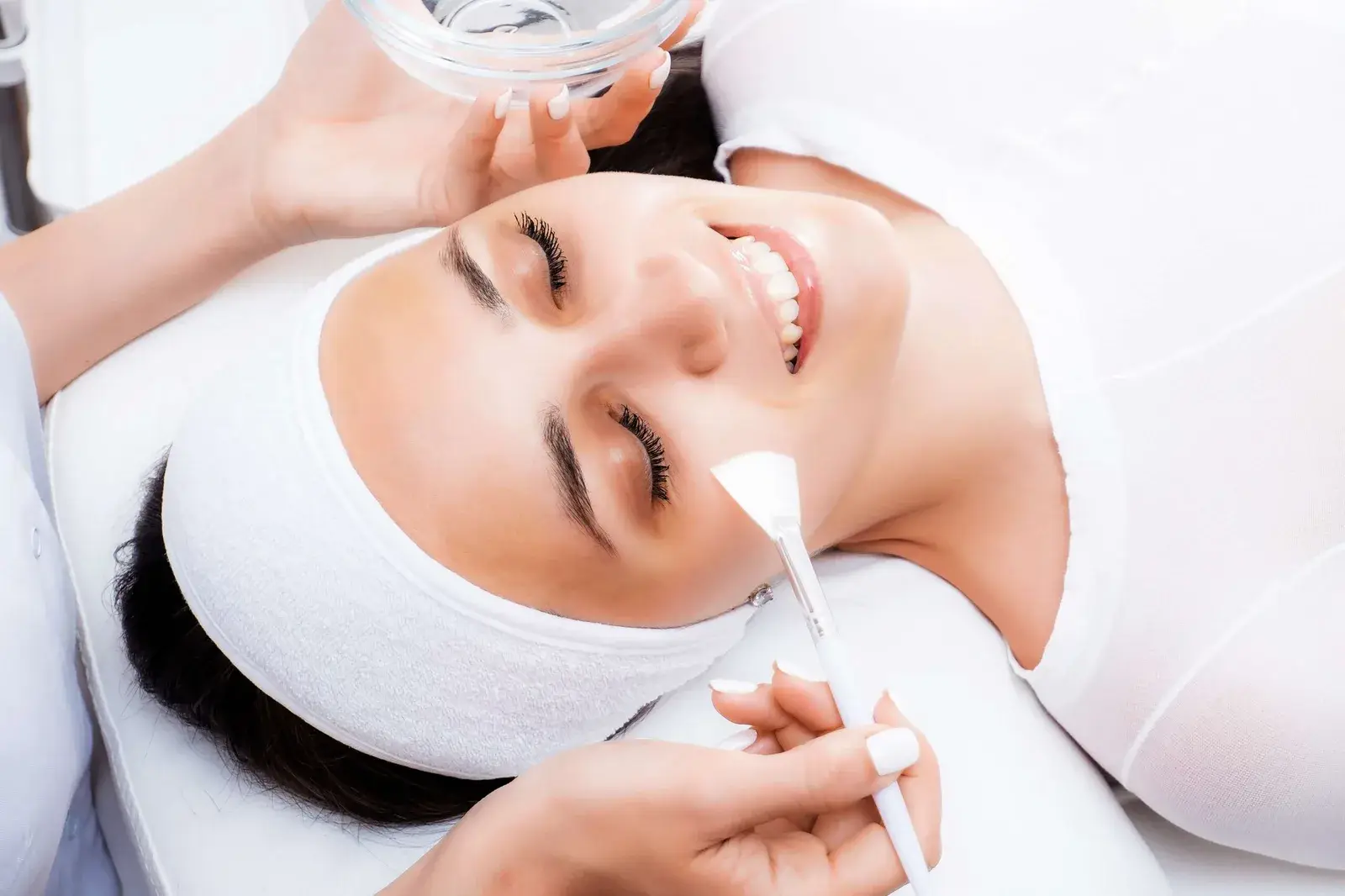
How long does a chemical peel take to heal, and what is the aftercare?
Light peels usually heal in 1 to 7 days, with redness followed by fine scaling; medium peels take 7 to 14 days with redness and swelling. Aftercare means gentle cleansing, bland moisturiser, no picking, no retinoids or acids for several days, and daily sun protection of at least SPF 30.
- Cleanse with lukewarm water and a gentle, fragrance-free cleanser for the first few days.
- Moisturise often with the barrier cream recommended by your practitioner.
- Let flaking skin shed naturally; picking can cause marks and pigmentation.
- Pause retinoids, vitamin C, exfoliating acids, scrubs and waxing until your practitioner advises, usually several days after a light peel.
- Avoid saunas, steam, hot yoga and intense exercise for 48 hours.
- Wear SPF 30 or higher with 4-star UVA daily and avoid direct sun, particularly between 11am and 3pm from March to October, as the NHS advises.
- Contact the clinic if you notice blistering, crusting, spreading redness or cold sore symptoms.
When to avoid or delay a peel
Do not have a peel during pregnancy, with active cold sores, broken or sunburnt skin, or during an eczema or rosacea flare. The British Association of Dermatologists advises avoiding waxing, epilation and dermabrasion during isotretinoin treatment and for up to 6 months afterwards, because skin can scar or change colour; we apply the same caution to peels and microneedling. Tell us about any history of keloids or cold sores, which may need preventive treatment.
The 2018 Stanford review lists the complications clinicians plan to avoid, particularly with medium and deep peels: pigment changes, scarring, bacterial or fungal infection and cold sore reactivation. These risks are low with superficial peels in experienced hands, which is one reason we build up gradually rather than starting deep.
How much does a luxury facial cost in London?
In London, a 60 to 75 minute luxury facial typically costs £120 to £280, and an advanced facial combining a peel, needling and LED £180 to £350. A course of six booked together is typically £650 to £1,700. Medium and deeper peels are priced after assessment because the protocol varies.
| Option | Typical London price | Notes |
|---|---|---|
| Luxury facial (60 to 75 minutes) | £120 to £280 | Skin assessment, cleanse, actives, massage, finish |
| Advanced facial with technology (peel, needling, LED) | £180 to £350 | Depends on combination |
| Light chemical peel added to a facial | £40 to £110 | Superficial peels only |
| Course of 6 facials booked together | £650 to £1,700 | Lower cost per session |
| Individual add-ons | £25 to £150 each | LED, masks, oxygen infusion, microneedling |
| Medium or deep peel | Priced after assessment | Requires consultation and preparation |
Indicative ranges only, not Levirgo prices. Your plan and price are confirmed at booking or after your assessment.
Value comes from the course and the home routine, not a single visit. Our guide to non-invasive facial rejuvenation costs in London compares facials with boosters, devices and injectables.
How to choose a luxury facial and peel clinic in Knightsbridge
Choose a clinic that assesses your skin before selecting a peel, explains the depth and downtime, has experience with your skin type, and involves registered healthcare professionals for medium or deeper peels. Check registers, ask about aftercare, and be wary of fixed menus or heavy product selling.
- Assessment first: a proper history, including isotretinoin, pregnancy, cold sores and recent treatments.
- Transparent about depth: you should know whether a peel is superficial, medium or deep and what that means for recovery.
- Skin-of-colour experience: ask how they adapt peels for Fitzpatrick types IV to VI.
- Regulated oversight: doctors are listed on the General Medical Council register and nurses on the Nursing and Midwifery Council register; the JCCP also keeps a practitioner register.
- Written aftercare and a named contact if your skin reacts.
- Honest limits: a good clinic will tell you when a facial will not solve a problem, and what will.
Regulation in England is tightening. Under the Department of Health and Social Care’s proposals, superficial peels would be licensed “green” procedures, medium-depth peels “amber” procedures needing healthcare oversight, and deeper peels such as phenol “red” procedures limited to regulated healthcare professionals. Choosing a clinic that already works this way protects you now.
Why choose Levirgo for a luxury facial in Knightsbridge?
Levirgo Aesthetics Clinic is a doctor-led clinic at 6 Beauchamp Place, Knightsbridge, London SW3 1NG, moments from Harrods and a few minutes’ walk from Knightsbridge Underground station on the Piccadilly line. Every facial begins with an assessment and draws on six professional peels, add-ons and clinical oversight.
- Facials and peels designed around your skin type and concerns, never a one-size routine.
- Six professional peels, from a gentle superficial peel to Jessner’s and deeper resurfacing, matched to your skin.
- Evidence-based skincare and advanced techniques, with add-ons chosen to amplify a specific result.
- A doctor-led clinic, so acne, melasma and sensitive skin can be assessed medically when needed.
- Honest home-care advice: what to keep, add or stop.
- Convenient for clients from nearby Chelsea, South Kensington, Kensington and Belgravia.
Book your luxury facial online, ask us a question first, or read more in our face treatments journal.
Frequently asked questions
How much does a luxury facial cost in Knightsbridge?
In London, a 60 to 75 minute luxury facial is typically £120 to £280, and an advanced facial combining a peel, needling and LED is £180 to £350. A course of six booked together usually works out at £650 to £1,700. These are indicative ranges; your price is confirmed at booking.
What is the difference between a spa facial and a medical facial?
A spa facial follows a set routine designed mainly for relaxation. A medical-grade facial starts with a skin assessment and medical history, uses professional actives such as chemical peels at defined strengths, and is adapted to your skin type and concerns, with aftercare and a plan to track change over a course.
Which chemical peel is best for acne?
Salicylic acid is usually first choice for oily, congested and acne-prone skin because it is oil-soluble and works inside pores. Jessner’s peel, a multi-acid formula, suits active acne and red or brown marks. Persistent or scarring acne should also be assessed medically, because prescription treatment may be needed alongside peels.
Which chemical peel is best for pigmentation?
Glycolic peels are commonly used for dullness and mild discolouration, and medium or deeper peels for stubborn pigmentation. Melasma is harder to treat and often returns, so it needs a combined plan and strict sun protection. In one split-face study, adding glycolic peels to laser more than doubled improvement in melasma scores.
Do chemical peels hurt?
Superficial peels usually cause tingling, warmth or mild stinging for a few minutes, which settles once the peel is neutralised or removed. Medium peels feel hotter and more intense, and deeper peels need medical pain management. Your practitioner will check your comfort throughout and can cool the skin if needed.
Will my skin actually peel after a chemical peel?
Not always. Many superficial peels cause only light flaking or dryness for a few days, and some cause no visible peeling at all, yet still work. Jessner’s and medium peels usually cause visible peeling. Visible peeling is not a measure of how well a peel has worked, so do not judge your result by the amount of flaking.
How long does a chemical peel take to heal?
The American Academy of Dermatology gives 1 to 7 days for light peels, 7 to 14 days for medium peels and 14 to 21 days for deep peels. Most people return to work straight after a superficial peel, but plan quieter days around medium peels, when redness and swelling are expected.
How often should I have a luxury facial or peel?
Most skin does well with a facial every four to six weeks. Light peels are often given as a course of three to five, every two to five weeks, as the American Academy of Dermatology describes. Medium and deeper peels are repeated far less often, sometimes only once or twice a year.
Are chemical peels safe for darker skin?
Yes, with the right peel and practitioner. Skin types IV to VI are more prone to post-inflammatory hyperpigmentation, so superficial salicylic, glycolic or mandelic peels are preferred and aggressive depths avoided. In a study of 25 patients with skin types V and VI, 88% improved with salicylic peels, with only mild side effects in 16%.
Can I have a chemical peel while taking isotretinoin?
No. The British Association of Dermatologists advises avoiding waxing, epilation and dermabrasion during isotretinoin treatment and for up to six months afterwards, because skin may scar or change colour. We apply the same caution to chemical peels and microneedling. Please tell us about any current or recent acne medicines before booking a facial.
Can I wear make-up after a peel?
After a superficial peel, light mineral make-up is usually fine from the next day once any stinging has settled. After medium peels, wait until the skin has healed and stopped flaking. Always apply SPF 30 or higher with 4-star UVA protection first, and use clean brushes to reduce the chance of irritation.
Is a luxury facial worth it?
It is worth it when it changes your skin and your routine, not just your mood for an afternoon. A facial built on a skin assessment, with professional peels chosen for your skin type and a clear home plan, gives lasting value over a course. A fixed routine at a luxury price usually does not.
Levirgo Aesthetics Clinic · Knightsbridge
A luxury facial defined by results, not just ritual
Skin assessment, professional peels chosen for your skin type and clinical oversight on Beauchamp Place, Knightsbridge. No obligation to proceed.
Sources & further reading
- Soleymani T, Lanoue J, Rahman Z. A Practical Approach to Chemical Peels: A Review of Fundamentals and Step-by-step Algorithmic Protocol. J Clin Aesthet Dermatol, 2018
- American Academy of Dermatology. Chemical peels: FAQs
- Grimes PE. The Safety and Efficacy of Salicylic Acid Chemical Peels in Darker Racial-Ethnic Groups. Dermatologic Surgery, 1999
- Garelick E, et al. Chemical Peels in Skin of Color: A Scoping Review of Safety, Efficacy, and Practice Patterns. Cureus, 2026
- Fitzpatrick TB. The Validity and Practicality of Sun-Reactive Skin Types I Through VI. Archives of Dermatology, 1988
- Flament F, et al. Effect of the Sun on Visible Clinical Signs of Aging in Caucasian Skin. Clin Cosmet Investig Dermatol, 2013
- Park KY, et al. 1064-nm Q-switched Nd:YAG Laser Plus 30% Glycolic Acid Peel vs Laser Monotherapy for Melasma. Clinical and Experimental Dermatology, 2011
- Ishfaq F, et al. A Comparison of Microneedling versus Glycolic Acid Chemical Peel for the Treatment of Acne Scarring. J Clin Aesthet Dermatol, 2022
- Agu-Jefferson I, et al. Microneedling Versus Chemical Peels for Atrophic Acne Scars: A Systematic Review and Meta-Analysis. Cureus, 2026
- British Association of Dermatologists Patient Hub. Isotretinoin
- NHS. Sunscreen and sun safety
- Department of Health and Social Care. The licensing of non-surgical cosmetic procedures in England: consultation document
This article is general information about facials and chemical peels and is not medical advice. Suitability depends on your skin type, medical history and medicines, and should be assessed in person. Results and recovery vary between individuals and are not guaranteed. Prices are indicative London ranges for 2026 and are confirmed at booking or after assessment.